Move follows escalating diplomatic spat between Donald Trump and German Chancellor Friedrich Merz over the Iran war
US to Withdraw 5,000 Troops from Germany as Trump-Merz Rift Deepens Over Iran War
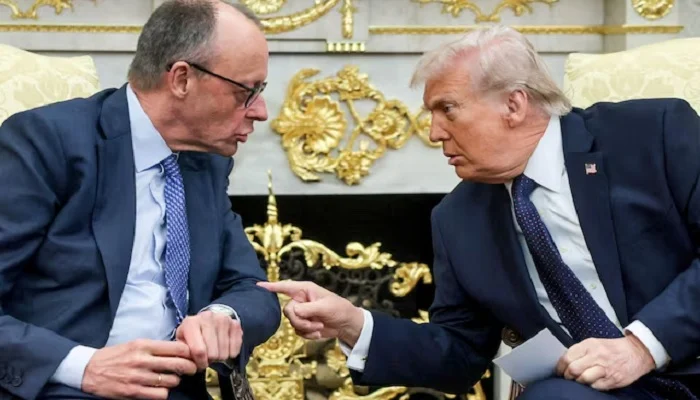
US President Donald Trump meets German Chancellor Friedrich Merz in the Oval Office at the White House.
- US to withdraw 5,000 troops from Germany within 6–12 months
- Diplomatic tensions rise between Trump and German Chancellor Friedrich Merz
- Around 35,000 US troops currently stationed in Germany
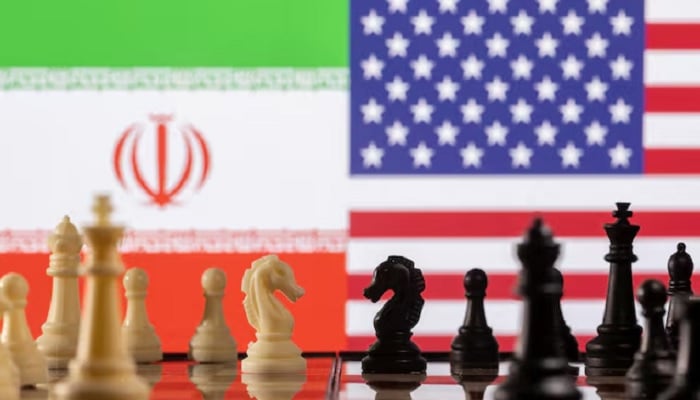
The United States has announced plans to withdraw 5,000 troops from Germany, signaling growing tensions between Washington and European allies amid the ongoing Iran war.
The Pentagon confirmed the troop reduction on Friday, stating the move would be completed within six to twelve months. Germany currently hosts approximately 35,000 US military personnel, the largest American deployment in Europe.
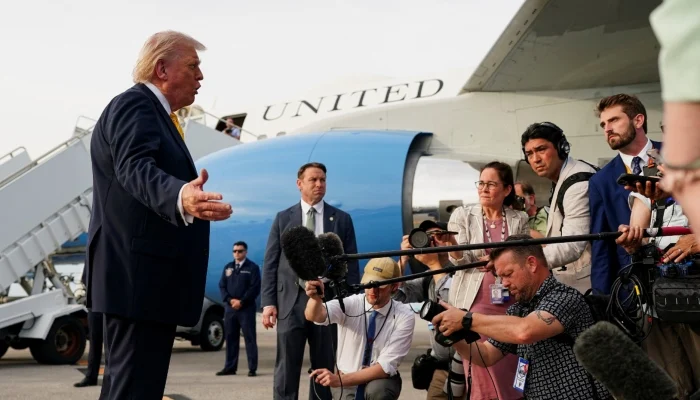
The decision follows a public dispute between President Donald Trump and German Chancellor Friedrich Merz. Merz recently criticized US strategy in the Iran conflict, suggesting that Iran was gaining the upper hand in negotiations and questioning Washington’s exit strategy.
A senior Pentagon official described the German leadership’s remarks as “inappropriate and unhelpful,” adding that Trump’s response reflects frustration with allied criticism during a sensitive geopolitical crisis.
The troop withdrawal will reduce US military presence in Europe to levels seen before the Russian invasion of Ukraine, when forces were increased under former President Joe Biden.
The move also aligns with the Trump administration’s broader push for European nations to take greater responsibility for regional security. However, it underscores Trump’s willingness to reassess alliances in response to perceived lack of support.
Rising NATO Tensions
The development comes amid broader strains within NATO. Reports indicate the Pentagon has considered measures against allies that failed to back US operations during the Iran conflict, including reviewing relations with Spain and the UK.
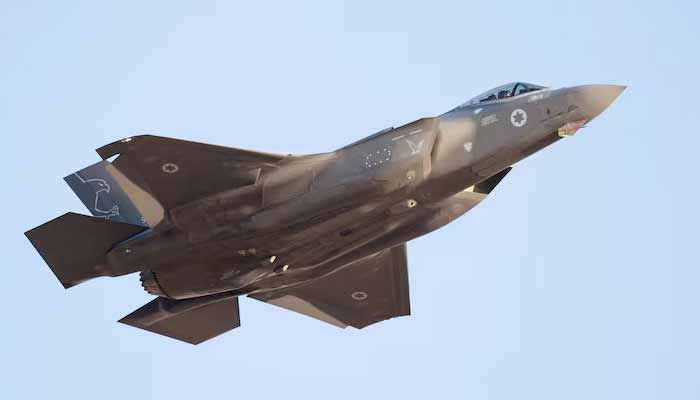
Trump has hinted at further troop withdrawals from other European countries such as Italy and Spain. He has also criticized NATO allies for not contributing naval support to reopen the strategically critical Strait of Hormuz, which remains largely closed due to the conflict.
Strained Relations with European Leaders
Tensions extend beyond Germany. Trump has clashed with Italian Prime Minister Giorgia Meloni and criticized European leaders over their stance on the Iran war.
Germany, however, maintains it has supported US efforts, including allowing the use of military bases and airspace. German officials also pointed to ongoing cooperation and increased defense spending commitments as evidence of their support.
Despite this, the troop reduction decision reportedly surprised German military officials, who had recently held what they described as productive discussions with US counterparts.
Strategic and Economic Implications
Analysts warn the withdrawal could widen the divide between the United States and Europe. Experts suggest European nations may accelerate defense spending and strategic independence as trust in Washington weakens.
The Pentagon confirmed that as part of the withdrawal, a brigade combat team will be removed from Germany, and a planned deployment of a long-range fires battalion has been canceled.
As geopolitical tensions rise, the future of US-Europe relations and NATO cohesion remains uncertain, particularly as the Iran conflict continues to reshape global security dynamics.
About the Author